Clostridium difficile, also known as C. difficile, is a gram-positive, anaerobic bacterium that is a spore forming bacillus that is the cause of mild to severve diarrhea due to an infection or inflammation of the colon. This particular bacterium can be found in the stomach of up to 3% of the average healthy adults and up to approximately 70% of healthy infants. These percentages are considered to be normal. Two forms of of C. difficile can be isolated: one that is a non-infectious strain called a spore, and the other is an infectious bacteria. These two strains are known as Toxin A which is an enterotoxin, and Toxin B which is a cytotoxin. Clostridium difficile 027 in particular is the most virulent strain known for causing infections. Though highly virulent, the infectious form cannot survive for long in the environment (outside of a host) but the spore form can last for a relatively long time. 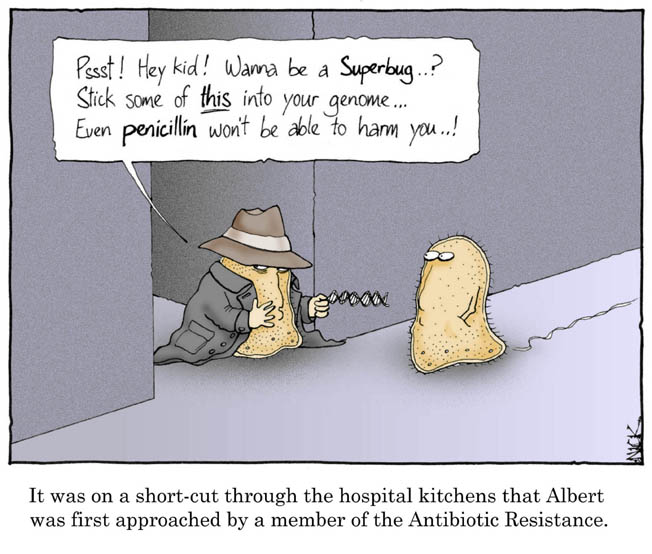 | 
Clostridium difficile has been known to be an antibiotic resistant bacteria. Once a patient has been put on antibiotics, the strain of bacteria take advantage of the immunocompromised individual to start invade and infect the suseptable host. |
